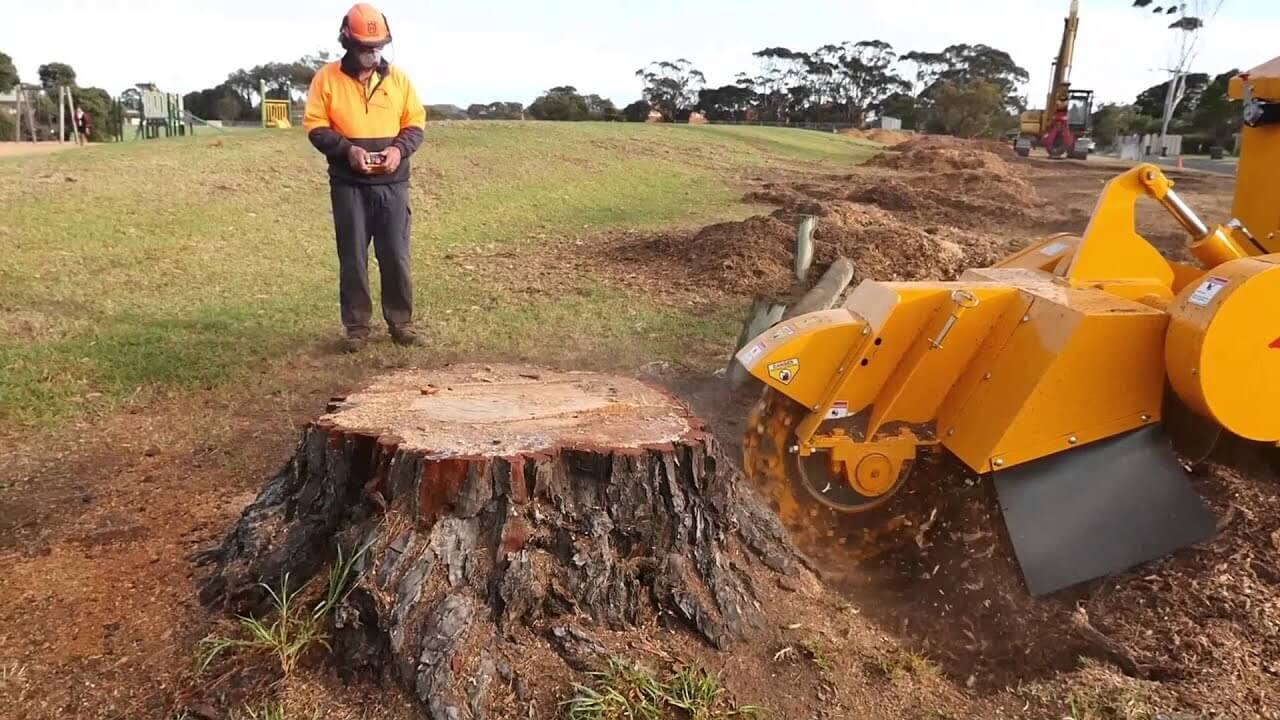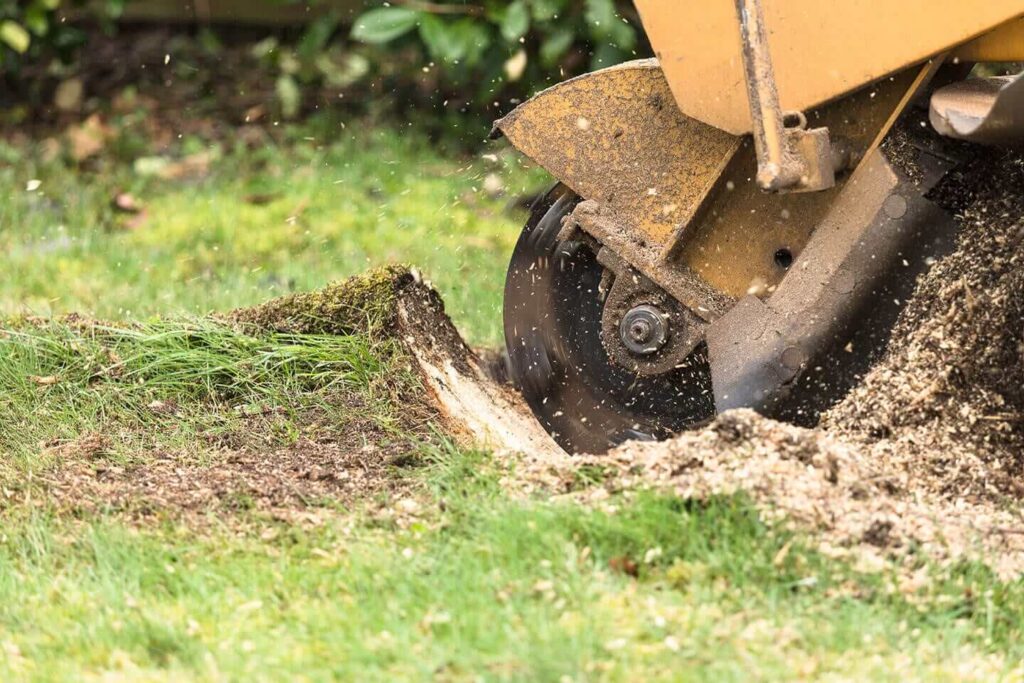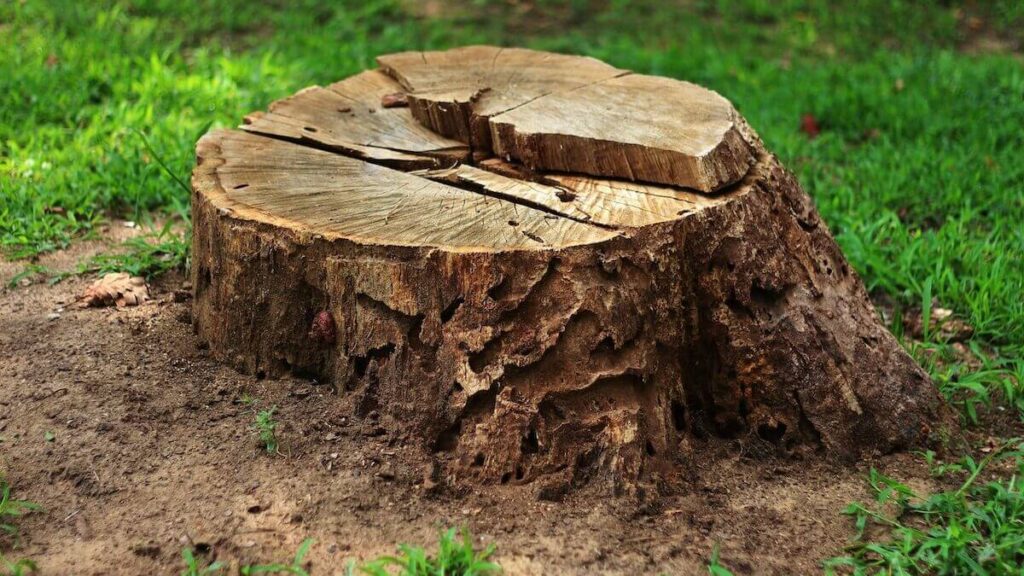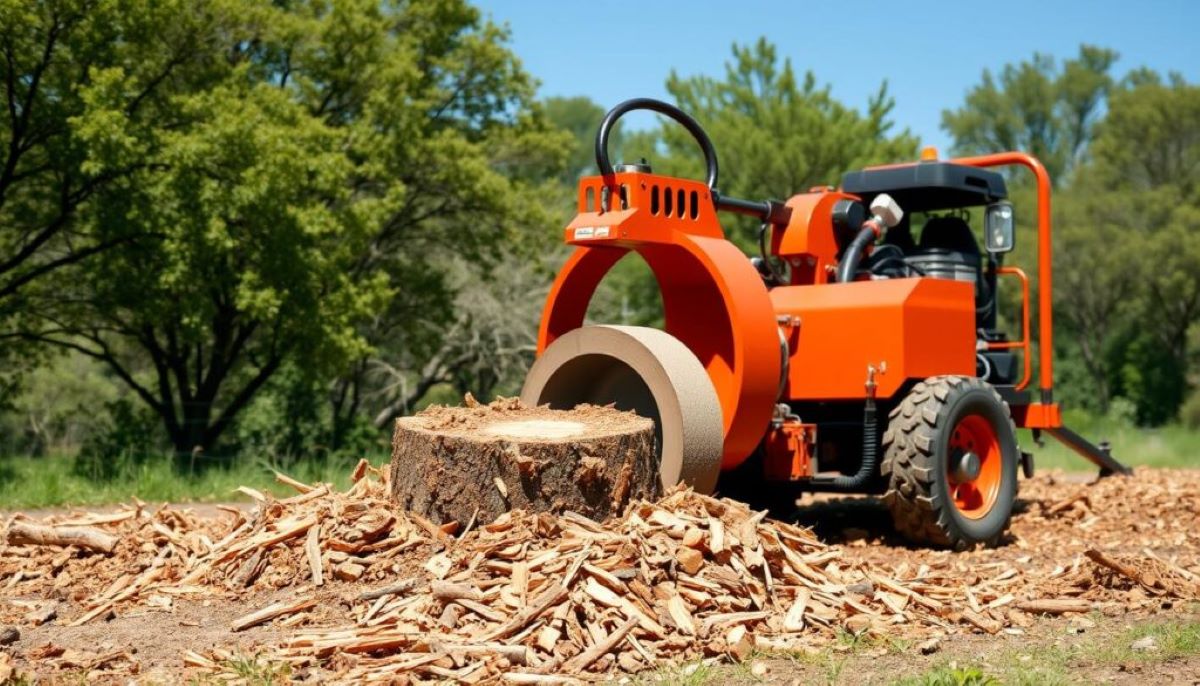
The fastest way to avoid surprises is to treat stump grinding like a small scope-of-work project: define what gets removed, how deep, and what happens to the chips.
What is the average cost of stump grinding?
When discussing stump grinding prices, most homeowners pay $150 to $600 for one stump, with many standard jobs landing in the $200 to $400 range. Smaller stumps with easy access can be closer to $100 to $200, while large stumps or complex setups can reach $700+.
Stump grinding prices can rise quickly when a stump is wide, hardwood, close to structures, or located where equipment is difficult to maneuver.
How do stump grinding companies calculate the price?
They typically price by stump diameter, then adjust for site difficulty and add-ons. Many contractors measure the stump at ground level and charge a per-inch rate, or they offer tiered flat pricing (small, medium, large). They may also price by time if there are multiple stumps or heavy root flare.
A written estimate should state the measured diameter and what depth they plan to grind.
How much does stump grinding cost per inch?
Per-inch pricing commonly falls around $2 to $6 per inch of diameter, though it varies by region and minimum trip fees. A 20-inch stump could therefore price roughly $40 to $120 by that method, but real-world totals are often higher due to minimum charges.
If a quote seems unusually low per inch, homeowners should confirm whether there is a minimum service fee.
How much does it cost for small vs large stumps?
Small stumps (roughly under 12 inches) are often $100 to $250 if access is easy. Medium stumps (around 12 to 24 inches) commonly run $200 to $450. Large stumps (often 24+ inches) can be $400 to $900+, especially with extensive root flare.
Multiple large stumps can sometimes reduce the per-stump price when done in one visit.
What factors increase stump grinding cost the most?
The biggest cost drivers are diameter, wood hardness, access, and risk. A wide hardwood stump takes longer to grind and dulls teeth faster. Tight gates, steep slopes, muddy yards, or stairs increase labor and may require smaller machines.
Stumps near foundations, fences, buried utilities, irrigation lines, or retaining walls can also raise pricing due to slower, careful grinding.
Does grinding depth change the price?
Yes. Most standard grinding targets 4 to 6 inches below grade, which works for many lawns and prevents tripping hazards. Deeper grinding, such as 8 to 12 inches or more, can cost extra because it takes longer and may require repositioning.
If they plan to replant a tree in the same spot, they should ask for deeper removal or a plan for managing remaining roots and chips.
Do roots get removed with stump grinding?
Usually not. Standard stump grinding removes the stump and some upper root flare, but major roots remain underground. This is why grinding is typically cheaper than full stump and root excavation.
If they need roots removed for hardscaping, a new foundation, or plumbing work, they should request an excavation quote instead of a grind-only quote. You may like to visit https://www.business.qld.gov.au/industries/farms-fishing-forestry/forests-wood/native-forests/private to get more about private native forestry.
What add-on services can change the final bill?
Common add-ons include wood chip hauling, backfilling with soil, topsoil and seed, and raking/cleanup. Some crews leave chips in a neat pile, while others include full cleanup.
If the goal is a ready-to-sod lawn, they should ask for a bundled price that includes hauling chips and adding compactable fill, not just grinding.
Is it cheaper to grind multiple stumps at once?
Yes. Many contractors offer discounted pricing per stump when multiple stumps are done on the same trip. The first stump often carries the highest cost because it covers travel, setup, and minimum charges.
Homeowners with several stumps should ask for a line-item quote showing the first-stump price and the reduced rate for additional stumps.
How much does DIY stump grinding cost compared to hiring a pro?
DIY can look cheaper upfront, but it is not always. Renting a stump grinder often costs about $100 to $300 per day, sometimes more for larger machines, plus delivery fees, fuel, and safety gear. The job can also take longer than expected, especially for hardwood or wide stumps.
Hiring a pro often makes sense when the stump is large, access is tight, or utilities and structures are nearby.
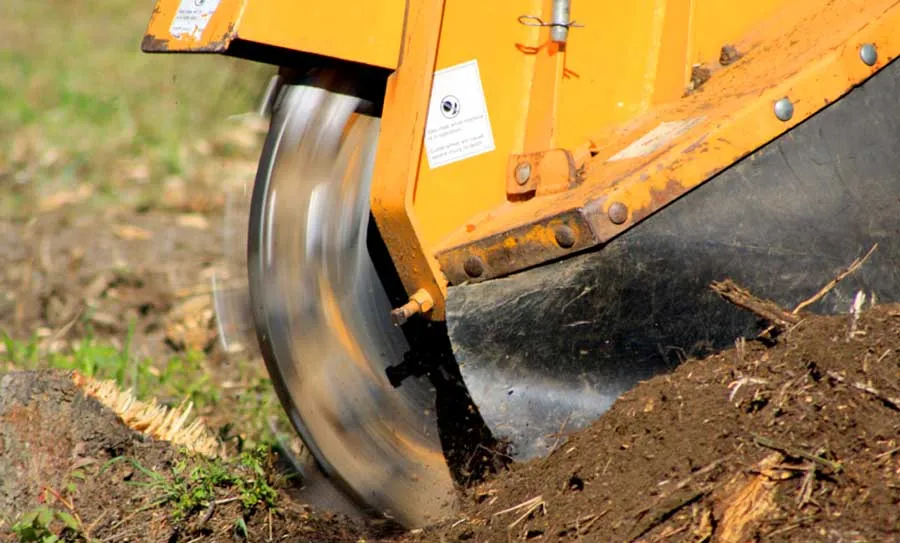
How can homeowners get an accurate stump grinding quote?
They should request a quote that includes measured diameter, grinding depth, access notes, and cleanup details. Photos help, but an on-site look is better if the stump is near obstacles or the yard is tricky.
They should also confirm whether the estimate includes marking utilities, what happens to chips, and whether there is a minimum service fee.
What should homeowners ask before they book?
They should ask what depth they will grind, whether chips are removed, and how the area will be left. They should also ask if the price changes if the stump is larger than expected or if buried rocks, metal, or debris are encountered.
Finally, they should verify insurance and confirm scheduling, because wet ground or frozen soil can affect timing and access.
More to Read : Local Tree Care Advice From an Experienced Arborist Wahroonga
FAQs (Frequently Asked Questions)
What is the typical cost range for stump grinding a single stump?
Most homeowners can expect to pay around $150 to $600 for grinding a typical single stump. Small, easy-to-access stumps often cost near the lower end, while large or awkward stumps can climb higher in price.
How do stump grinding companies determine their pricing?
Companies usually calculate the price based on the stump’s diameter measured at ground level, adjusting for site difficulty and any add-on services. They may charge a per-inch rate, offer tiered flat pricing (small, medium, large), or price by time if multiple stumps or heavy root flare are involved.
Does the size of the stump affect the grinding cost?
Yes. Small stumps under about 12 inches typically cost between $100 and $250. Medium stumps from 12 to 24 inches generally run $200 to $450. Large stumps over 24 inches can range from $400 to $900 or more, especially if there is extensive root flare.
What factors most increase the cost of stump grinding?
The biggest cost drivers include stump diameter, wood hardness, site access challenges (like tight gates or steep slopes), and risk factors such as proximity to foundations, fences, buried utilities, irrigation lines, or retaining walls that require slower, more careful grinding.
Are roots removed during stump grinding?
Typically not. Standard stump grinding removes the stump and some upper root flare but leaves major roots underground. For complete root removal needed for hardscaping or construction projects, excavation services are recommended instead of grind-only quotes.
Can homeowners get discounts when grinding multiple stumps?
Yes. Many contractors offer discounted pricing per stump when multiple stumps are ground during the same visit. The first stump usually carries the highest cost due to travel and setup fees, with reduced rates applying to additional stumps.